Professional Metal Roofing
In Great Falls, you need roofing built for extreme sun exposure, strong wind, substantial snowfall, and freeze-thaw cycles. Metal roofing systems often outperforms traditional asphalt by resisting impact damage, fire damage, uplift forces, and rapid weathering, while moving snow off more efficiently. You should watch for broken shingles, lifted flashing, water intrusion, granule erosion, or roof sags after storms. A local roofing professional will inspect the decking, underlayment, ventilation, and storm damage, then propose repair or replacement based on long-term performance.
Essential Points
- Great Falls roofing must endure harsh UV rays, powerful gusts, deep snow, and freeze-thaw cycles that worsen leaks and cause structural failure.
- Metal roofs provide service for between 40 and 70 years, resist wind, fire damage, and impacts superior to traditional asphalt, and shed snow readily.
- Asphalt shingles run less upfront but often decline faster, with curling, cracking, plus granule loss in Great Falls conditions.
- Problem signs involve cracked shingles, loose flashing, deteriorating valleys, ceiling discoloration, attic condensation, and storm damage over various roof slopes.
- Roofing experts in Great Falls perform roof inspections, leak diagnostics, storm repairs, emergency tarping, and quality metal roof installation featuring correct underlayment and flashing.
Understanding How Great Falls Seasonal Patterns Affects Your Roof
Given that Great Falls gets intense sun, strong wind, hail damage, substantial snowfall, and temperature shifts, your roof carries constant pressure that reduces operational life. Exposure to UV parches roof elements, deteriorates seals, and increases surface breakdown. Strong wind lifts edges, pushes water under sensitive connections, and displaces flashing components surrounding roof penetrations.
Snow loads imposes pressure, with ice dams contain water at eaves and heighten risk of leaks. Repeated freeze thaw cycles enlarge hairline cracks, open roof seams, and damage roof underlayment. Hail damage damage protective surfaces, damage coating layers, and leave exposed base materials to moisture intrusion. You also deal with microclimate effects: south-facing sections get hotter sooner, areas in shade stay damp longer periods, and wind-exposed sections deteriorate harder. Routine inspections help homeowners spot storm damage soon, preserve water drainage
Metal Roofing against Shingles in Great Falls
If you evaluate metal roofing against asphalt shingles in Great Falls, the selection frequently centers on weather resistance, lifespan, maintenance, and lifetime expenses. Metal panels resist damage from elements like impact, fire, and wind more effectively than traditional materials, and they generally endure 40 to 70 years rather than 15 to 30.
Most often, you'll outlay more upfront for metal systems, yet you may change it less often and conduct fewer maintenance activities. Standard shingles charge less upfront and supply basic spot work, though they may curl, fracture, or drop granules more swiftly. Metal systems also enables better snow discharge, which minimizes snow pileup when well-detailed with protective guards. If you're looking at adding solar, metal delivers simpler mounting alternatives and fewer holes in the roof. The best selection relies on available funds, anticipated holding period, and maintenance tolerance.
Why Metal Roofing Is Effective in Montana
Engineered for thermal fluctuations, strong gusts, substantial snowfall, and powerful sun radiation, metal roofing works effectively in Montana's demanding climate. You receives a system that resists thermal movement, sheds moisture quickly, and maintains strength during freeze-thaw events. Interlocking panels, concealed fasteners, and advanced protective finishes help limit wind uplift, rust, and UV deterioration.
Additionally, you benefit from effective snow release, which minimizes snow weight on the roof and helps protect framing. Since metal roofing reflects sunlight, it helps reduce attic heat gain in warm, arid seasons. Its low water absorption supports performance when ice and snow occur. Metal roof durability matters in the Montana region, where constant weather exposure can shorten inferior roofing options. By utilizing proper underlayment, ventilation, and installation, the roof stays durable, energy-efficient, and serviceable for decades while requiring little upkeep.
Indicators That Your Roof Needs Repair
Uncovering roofing problems promptly stops from happening structural issues, interior water damage, and pricey new roof costs. Scan shingles that are cracked, flashing coming up, exposed nails or in-depth guide screws, rust-colored valleys, and caulking that's failed at vents, skylights, and chimneys. Throughout the home, watch roof discoloration, moist insulation materials, mold presence, or light coming in through the roof system
After weather events, for signs of impact, moved materials, and absent granules in drainage channels. Monitoring granule deterioration enables detection of compromised shingle surfaces before water seeps through the base layer. Insufficient roof ventilation likewise produces concerning signals: overwhelming heat, frosting, moisture problems, and shingles curling too soon. In case electricity bills jump out of nowhere, excess dampness and thermal buildup could be compromising roof function
Get roof service as soon as you spot compressed areas, ongoing leaks, or shifting metal edges. Quick repair keeps protected roof sections, insulation, and room finishes
When Roof Replacement Makes More Sense
Consider replacing your roof when severe weather impacts large sections, compromises key structural elements, or exceeds practical repair limits. If you're constantly paying on repeated leaks, failed patches, or repeated service calls, a new roof often provides improved long-term savings. An older roof assembly near or beyond its design life is unable to effectively protect your home, despite isolated repairs may still seem viable.
Major Weather Damage
When a severe storm affects extensive areas of your roofing, a full replacement typically delivers better financial and structural value compared to multiple repairs. After hail aftermath, wind uplift, or branch punctures, you may have damaged decking, wet underlayment, and widespread shingle failure that repairs can't reliably isolate.
You need a comprehensive evaluation, not temporary fixes. Weather damage often damage seals, loosen fasteners, and form hidden moisture routes near valleys, vents, and flashing. Even after cleanup, trapped water may continue damaging sheathing and insulation underneath. If deterioration impacts several slopes or exposes the roof assembly, replacement restores uniform protection, code compliance, and manufacturer-backed performance. It also lets you upgrade ventilation, underlayment, and impact-resistant materials so your next severe storm doesn't exploit the same vulnerabilities again.
Multiple Maintenance Expenses
Often, recurring leak repairs, shingle replacements, and flashing repairs accumulate higher costs versus a scheduled roof replacement. When you're calling for service each season, you're likely trapped in spending cycles that deplete your finances without fixing underlying deck, ventilation, or underlayment issues. Small patch jobs may restore temporary function, but they rarely provide system-wide performance.
You should compare yearly repair costs against replacement costs, rising labor costs, and material compatibility issues. Repeated fixes additionally generate warranty gaps, especially when multiple contractors handle different sections or incompatible products. Those gaps can leave you covering costs yourself when new failures emerge around earlier repairs. A full replacement provides you one integrated assembly, predictable installation standards, and streamlined maintenance schedules. In many cases, that reset reduces long-term roofing costs and reduces service disruptions significantly.
Aging Roofing Systems
Roof structures that have aged experience material flexibility loss, fastener displacement, sealant breakdown, and drainage decline, leading to increased leak probability and diminished weather resistance. Observable damage often feature cracked shingles, split membranes, corrosion at penetrations, and water leaks after storms. Surface-level fixes cannot address systemwide issues.
Roof replacement makes greater sense when assessments reveal water damage in decking, extensive granule erosion, insulation deterioration, or inadequate ventilation that intensifies thermal and moisture stress. You must also consider code upgrades, attachment strength, and flashing compatibility with newer materials. Complete replacement lets you correct hidden defects, improve drainage, and establish a configuration rated for current snow, hail, and wind demands. You'll spend more upfront, but you'll reduce emergency restoration, water damage to interiors, and comprehensive lifecycle expenses.
Storm Damage Management by Great Falls Roofers
Severe storms potentially damage roof systems within moments, so Great Falls roofing specialists undertake damage evaluation with swift, methodical review of shingles, flashing, underlayment, decking, and metal panels to detect apparent failures and covert moisture routes.
After initial storm evaluation, you get a documented scope of deterioration, water penetration, and structural hazard. Roofing contractors remove debris initially so fallen limbs, ice chunks, and loose objects stop scraping the roof or blocking drainage paths. They tarp exposed sections, patch holes, replace lifted shingles, refasten flashing, and check fastener integrity on metal sections. Should moisture penetrate decking, they will assess for water saturation, layer separation, and mold risk areas prior to authorizing restoration. You receive photographic evidence and dimensional data that support insurance claims and assist in ranking critical fixes versus appearance-related work.
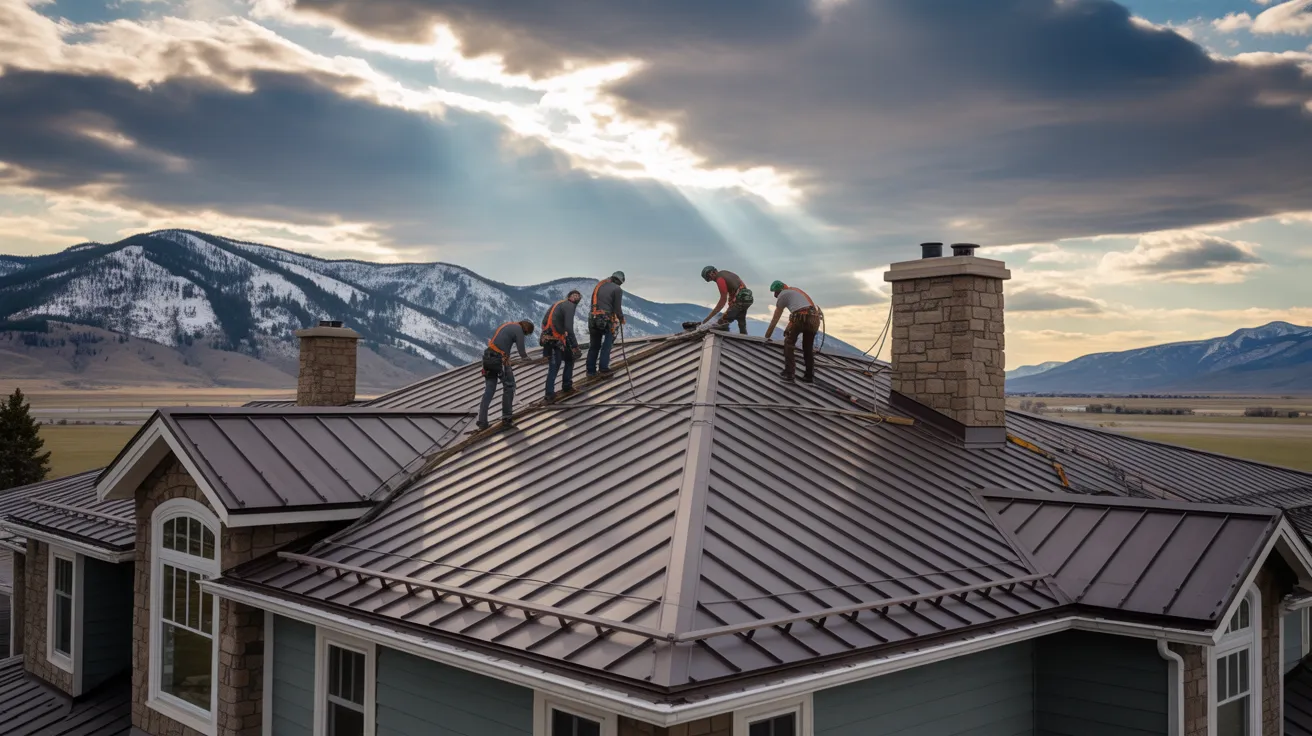
What Happens During Metal Roof Installation
From removal to last trim piece, metal roof installation follows a strict sequence that protects your home and roofing system efficiency. Initially, existing roofing is removed, decking is evaluated, and replace any soft or damaged sections. Subsequently, slope is confirmed, dimensions are verified, ventilation routes are assessed, and attachment zones are checked so panels align correctly.
Next, edge metal components, weather blocking layers, and backing material options are selected according to regional weather, roof angle, and building codes. Panels start from a level alignment, using fastening hardware meeting spacing requirements. In seam-lock systems, seam edges locked closed and remain aligned managing moisture flow and thermal expansion. To finish the project, penetrations are sealed, capping and trim pieces are mounted, critical areas are sealed, and completion inspection ensures waterproofing and final appearance.
Roofing Offerings Supplied by Great Falls Experts
For both routine repairs or total roof replacements, Great Falls roof specialists typically manage reviews, leak detection, weather damage repairs, roof recovery, roof placement, and preventive care for residential and commercial premises.
Extra options available through them involve flashing repairs, ventilation corrections, gutter setup, skylight sealing work, and ice dam mitigation. If hail or wind compromise structural decking, they will provide emergency tarp coverage to minimize water intrusion until permanent repairs start. Regarding aging systems, they examine roof underlayment, attachment points, penetrations, and drainage conditions, then advise targeted repairs or total replacement when appropriate. Numerous contractors handle shingle roofing, metal roofing, low-slope roofing, and roofing coatings. They may photograph harm for insurance purposes and organize maintenance appointments to spot sealant issues, rust, panel movement, and clogged valleys prior to matters compromise your roof durability.
Ways to Pick Your Great Falls Roof Contractor
When choosing a Great Falls roof contractor, verify they maintain appropriate licensure and hold up-to-date liability insurance and workers' compensation coverage. Next, evaluate their roof materials they propose enabling you to assess product performance, durability, and expense with job requirements. It's also crucial to review the regional experience, because contractors knowledgeable about Great Falls climate patterns and regulatory requirements typically deliver better results.
Verify Licensing And Insurance
Prior to completing a contract in Great Falls, verify the roofer holds the Montana roofing license and carries both general liability and workers' compensation insurance. Avoid relying on verbal claims. Request the license identification, business name, and insurer information, subsequently complete license verification through state licensing records and local records. Match the company title on each document.
For insurance confirmation, ask for certificates provided directly from the insurance company or insurance agent. Verify policy information, effective coverage dates, coverage limits, and exclusion details. Ensure that workers' compensation covers all worker on your site. In the event that a roofing professional hires sub-contractors, request proof they are insured too. Proper insurance and licensing protect you against exposure to legal liability, code issues, unpaid contractor claims, and scheduling delays. Should records fails to match, choose a different contractor.
Assess roof options
Since Great Falls roofs endure hail, high winds, snow load, and sharp temperature swings, you should evaluate materials based on performance, service life, maintenance demands, and total installed cost—not simply the contractor's price.
Asphalt shingles typically provide the lowest installation cost, though impact resistance ratings, wind coverage warranties, and granule deterioration prove important. Metal carries greater initial expenses, but it sloughs off snow, resists fire, and delivers improved energy efficiency via reflective finishes. Synthetic slate and composite shingles reduce weight loads while boosting impact resistance, although product quality differs. Request manufacturer data regarding Class 4 impact resistance, wind uplift, ice-dam performance, and anticipated longevity. You must also evaluate underlayment systems, ventilation compatibility, fastener requirements, and repair accessibility. An budget-friendly roof may cost significantly more in the future if it fails early or requires constant storm damage repairs and replacement services.
Examine regional expertise
Material preference counts, though the contractor's local reputation often determines capability that installation works in Great Falls. You need to verify the duration a contractor served in the region and if they have handled hail damage, heavy snow, chinook winds, and freeze-thaw damage on like properties. Regional background shows whether crews understand ventilation methods, ice dam remediation, flashing standards, and Cascade County requirements.
Seek locations of completed projects, then inspect quality from the ground. Examine Contractor testimonials for tendencies: promptness, jobsite cleaning, warranty handling, and estimate accuracy. You also need to confirm material supplier ties and permit familiarity, since established local contractors source stock faster and resolve inspections with fewer delays. A contractor who has demonstrated Great Falls experience cuts installation risks and improves long-term roof performance for your property.
Common Client Queries
Can local contractors provide Financing possibilities for replacement roofing systems?
Yes, plenty of Great Falls roofers provide payment plans for new roofs. You generally can select payment plans via the contractor or an outside lender. Expect terms based upon project cost, loan length, and your credit profile. Most lenders require credit checks before approval, and some present special offers for qualified applicants. You should compare APR, fees, down payment requirements, and prepayment terms before signing any roof financing contract.
Do roofing estimates in Great Falls generally require no payment?
Yes, roofing estimates in Great Falls are commonly free, especially when contractors provide free inspections for repairs or replacements. You should expect a documented estimate that specifies materials, labor, timeline, and cost breakdowns. Some companies may require payment for detailed reports, specialty diagnostics, or insurance documentation. Before you schedule, inquire about what the estimate covers, whether inspections are complimentary, and if additional fees apply to complex roof conditions or access.
How long do roofing warranties usually last in Great Falls?
Like a safety feature for your roof, warranties in Great Falls usually span 20–50 years for Manufacturer warranties, depending on material and product tier. You'll often get Labor warranties for 2–10 years, though some contractors offer longer coverage. You should verify what's prorated, transferable, and excluded, especially for wind, ventilation, and installation errors. Read the fine print so you realize exactly what protection you're actually investing in before signing.
Can roof work be scheduled during winter in Great Falls?
Yes, you can arrange roof work during winter in Great Falls, but you'll want weather contingencies. You can perform Winter repairs safely when crews track temperature, wind, ice, and material management limits. You should plan on delays during storms or extreme cold. Clearing snow often comes first so technicians can reach decking, locate leaks, and secure flashing. You'll get better results when you book early and keep flexible with scheduling windows.
Can Great Falls roofing companies help with insurance paperwork?
Yes, many roofing contractors in Great Falls assist you with claim paperwork after storm damage or impacts. You'll often access insurance assistance through documented inspections, photo evidence, project summaries, and estimate comparisons. They may also aid claim coordination by meeting with adjusters, specifying repair quantities, and matching line items to policy coverage. You should still check your claim carefully, because your insurance company approves payment terms, depreciation, deductibles, and final settlement amounts.
Final Thoughts
In Great Falls, your roofing system has to manage wind, snow, hail, and rapid temperature changes without failing. That's why finding the right roofer matters. Metal roofs stands out because they can last 40–70 years—often roughly two to three times longer than traditional asphalt shingles. When you take action early on repairs or replacements, you secure your home, lower long-term expenses, and enhance performance. Work with Great Falls roofing contractors who understand local climate and install systems built to survive.